
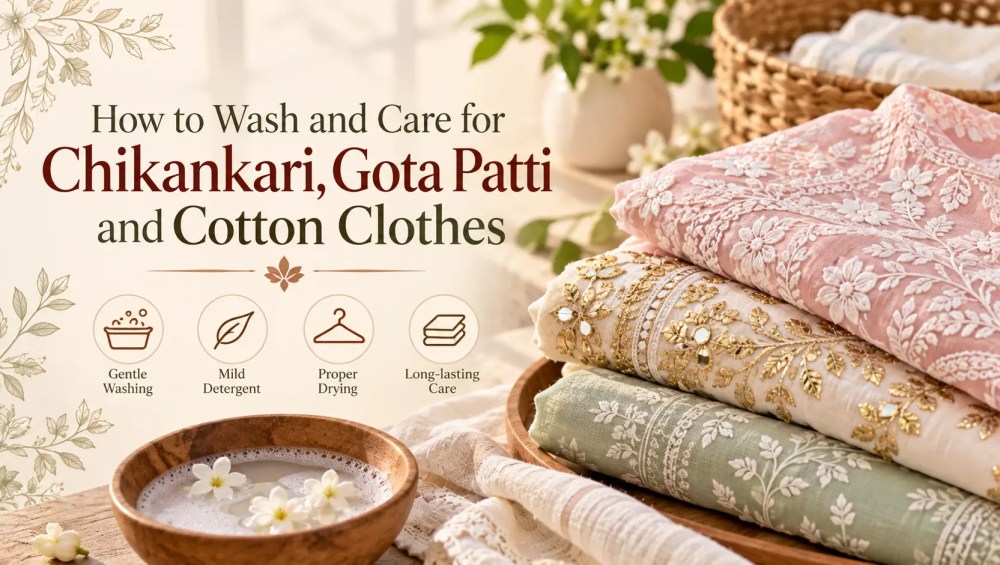
You have found the perfect Chikankari kurti. Now the worry sets in: how do you wash it without spoiling the embroidery?
The good news is that caring for Lucknowi and cotton clothes is simple once you know a few habits. A little gentleness goes a long way, and your favourite pieces can stay soft, bright and beautiful for years.
One rule comes before everything else: always read the care label on your garment first. The tips below are general guidance, and the label of your specific piece always comes first.
Before the first wash
- Wash new coloured pieces separately for the first few washes, since some dyes can release a little colour.
- Turn the garment inside out so the embroidery is protected from rubbing.
- Test any new detergent on a small hidden spot if you are unsure.
How to wash a Chikankari kurti
- Hand wash if you can. Fill a basin with cool or lukewarm water and add a small amount of mild liquid detergent.
- Swirl gently. Move the garment through the water. Do not scrub the embroidery or pull at the threads.
- Keep soaking short. A few minutes is enough. Leaving a garment in water for hours can lead to colour run and weaker fabric.
- Rinse until the water runs clear. Use cool, clean water and avoid wringing or twisting.
- Press out the water. Roll the garment in a clean towel and press gently.
If the label allows machine washing, use a mesh bag, a delicate cycle and cold water. Avoid bleach and strong stain removers, which can damage both fabric and thread.
Drying without fading
Dry in the shade, laid flat or hung on a padded hanger. Direct sun can fade colours, especially on deeper shades like navy, bottle green and rust orange.
Ironing Chikankari the right way
Iron while the fabric is slightly damp, on the reverse side, at a heat setting suitable for cotton. If you need to iron the front, place a thin cotton cloth over the embroidery first. Pressing directly on the stitches can flatten them and leave a shiny mark.
For a crisp, festive finish on cotton, a light touch of starch can help.
Caring for gota patti work
Gota patti trim is delicate, so treat it differently:
- Skip long soaking and avoid rubbing the trim.
- Spot clean small marks with a soft, damp cloth.
- Consider dry cleaning for the whole garment, if the care label recommends it.
- Keep the iron off the trim. Iron on the reverse side or use a cloth.
Caring for cotton co-ord sets and full cotton sets
Printed cotton, such as block prints, florals and paisleys, is easy to look after with a few habits:
- Wash in cool or cold water, inside out.
- Wash co-ord pieces together so they fade evenly and stay matched.
- Wash prints and light colours separately for the first few washes.
- Remember that cotton can shrink slightly, so avoid hot water and very hot dryers.
Looking after your dupattas
Hand wash gently, dry flat in the shade and store folded loosely. Avoid hanging a wet dupatta by one corner, which can stretch the fabric.
Storing your kurtis
- Make sure every piece is fully dry before you put it away.
- Store in a breathable cotton bag or wrap instead of plastic for long periods.
- Refold occasionally so permanent creases do not set along the same lines.
- Keep wardrobes dry in the monsoon, since damp air can cause musty smells and spots.
Handling stains quickly
Act fast and blot, do not rub, since rubbing spreads the mark and can damage embroidery. For oily marks, sprinkle a little talcum powder or cornflour to absorb the oil, then wash gently as above.
Five common mistakes to avoid
- Using hot water or harsh detergent.
- Wringing or twisting embroidered fabric.
- Drying in strong direct sunlight.
- Ironing directly over embroidery.
- Leaving damp clothes in the laundry basket.
Need help with your order?
If you have a question about the care of a specific piece, get in touch with us. And when you are ready for something new, browse the Avinya shop and enjoy free shipping on orders over ₹1,999.