
How to Wash and Care for Chikankari, Gota Patti and Cotton Clothes
You have found the perfect Chikankari kurti. Now the worry sets in: how do you wash it without spoiling the embroidery? The good news is that caring for Lucknowi and cotton clothes is simple once you know a few habits. A little gentleness goes a long way, and your favourite pieces can stay soft, bright and beautiful for years. One rule comes before everything else: always read the care label on your garment first. The tips below are general guidance, and the label of your specific piece always comes first. Before the first wash Wash new coloured pieces separately for the first few washes, since some dyes can release a little colour. Turn the garment inside out so the embroidery is protected from rubbing. Test any new detergent on a small hidden spot if you are unsure. How to wash a Chikankari kurti Hand wash if you can. Fill a basin with cool or lukewarm water and add a small amount of mild liquid detergent. Swirl gently. Move the garment through the water. Do not scrub the embroidery or pull at the threads. Keep soaking short. A few minutes is enough. Leaving a garment in water for hours can lead to colour run and weaker fabric. Rinse until the water runs clear. Use cool, clean water and avoid wringing or twisting. Press out the water. Roll the garment in a clean towel and press gently. If the label allows machine washing, use a mesh bag, a delicate cycle and cold water. Avoid bleach and strong stain removers, which can damage both fabric and thread. Drying without fading Dry in the shade, laid flat or hung on a padded hanger. Direct sun can fade colours, especially on deeper shades like navy, bottle green and rust orange. Ironing Chikankari the right way Iron while the fabric is slightly damp, on the reverse side, at a heat setting suitable for cotton. If you need to iron the front, place a thin cotton cloth over the embroidery first. Pressing directly on the stitches can flatten them and leave a shiny mark. For a crisp, festive finish on cotton, a light touch of starch can help. Caring for gota patti work Gota patti trim is delicate, so treat it differently: Skip long soaking and avoid rubbing the trim. Spot clean small marks with a soft, damp cloth. Consider dry cleaning for the whole garment, if the care label recommends it. Keep the iron off the trim. Iron on the reverse side or use a cloth. Caring for cotton co-ord sets and full cotton sets Printed cotton, such as block prints, florals and paisleys, is easy to look after with a few habits: Wash in cool or cold water, inside out. Wash co-ord pieces together so they fade evenly and stay matched. Wash prints and light colours separately for the first few washes. Remember that cotton can shrink slightly, so avoid hot water and very hot dryers. Looking after your dupattas Hand wash gently, dry flat in the shade and store folded loosely. Avoid hanging a wet dupatta by one corner, which can stretch the fabric. Storing your kurtis Make sure every piece is fully dry before you put it away. Store in a breathable cotton bag or wrap instead of plastic for long periods. Refold occasionally so permanent creases do not set along the same lines. Keep wardrobes dry in the monsoon, since damp air can cause musty smells and spots. Handling stains quickly Act fast and blot, do not rub, since rubbing spreads the mark and can damage embroidery. For oily marks, sprinkle a little talcum powder or cornflour to absorb the oil, then wash gently as above. Five common mistakes to avoid Using hot water or harsh detergent. Wringing or twisting embroidered fabric. Drying in strong direct sunlight. Ironing directly over embroidery. Leaving damp clothes in the laundry basket. Need help with your order? If you have a question about the care of a specific piece, get in touch with us. And when you are ready for something new, browse the Avinya shop and enjoy free shipping on orders over ₹1,999.

How to Style Chikankari Kurtis and Cotton Co-ord Sets: 7 Easy Looks
A good kurti should do more than one job. The same piece that carries you through a college lecture should also work for a family lunch with the right dupatta and a change of shoes. The secret is knowing a few simple pairings. Here are seven easy looks built around Lucknowi and Chikankari kurtis, cotton co-ord sets and full cotton sets, so you can get more out of every piece in your wardrobe. Look 1: The everyday college outfit Start with a short Chikankari kurti, such as a 3/4-sleeve Bakhiya style, and pair it with straight-fit jeans or cotton pants. Add flats or clean sneakers and a simple tote. The short length keeps things light and easy to move in. Look 2: The calm, polished office look Choose a long straight Chikankari kurti in a muted shade like sky blue, lavender or bottle green. Pair it with tailored cotton pants, add a slim watch or small studs, and finish with loafers or mojaris. The fine embroidery adds interest without feeling loud. Look 3: The festive evening For family functions and the festive season, go for a long kurti with gota patti work in a cheerful shade like lemon, peach or bright blue. Drape a contrast dupatta over it, add jhumkas and juttis, and you have a complete festive outfit without any heavy layering. Look 4: The relaxed brunch outing A frock-style, noodle-strap Chikankari kurti in pink or shaded brown looks lovely with white or cream pants. Since the straps are thin, carry a light dupatta or shrug if you want extra coverage. Keep jewellery minimal and let the embroidery do the talking. Look 5: The mix-and-match co-ord set Our co-ord sets, like the patchwork detail cotton cordset in rust orange, navy blue or mehndi green, are the easiest outfit to put on. Wear them together for a polished look in seconds. Then break them up. Pair the top with jeans and the bottom with a plain white tee, and one purchase becomes three outfits. Look 6: The complete cotton set On days when you want zero decisions, our full cotton sets do the work for you. Block prints, florals and paisleys in shades like lilac, lemon yellow and blue are made for pooja, family lunches and travel. Check each product page for exactly what is included in the set. Look 7: The dupatta that changes everything A plain kurti becomes a new outfit the moment you add a different dupatta. Try a pastel dupatta on a deeper kurti, or a soft neutral on a bright one. It is the cheapest way to refresh your wardrobe. Quick colour guide Soft pastels like lavender, lilac, powder blue and peach suit daytime and warm weather. Deep tones like navy, bottle green and rust orange work well for evenings and cooler days. Bright shades like lemon and sun yellow are cheerful choices for festive days. Three styling tips that always work Let the embroidery lead. With a detailed Chikankari kurti, keep jewellery and prints simple. Check the fit first. Use the size guide on each product page and measure yourself before ordering. Choose comfort fabrics. Cotton keeps you comfortable through long days, especially in warm and humid weather. Build your wardrobe with Avinya Every look above starts with one good piece. Explore the full Avinya collection and enjoy free shipping on orders over ₹1,999.
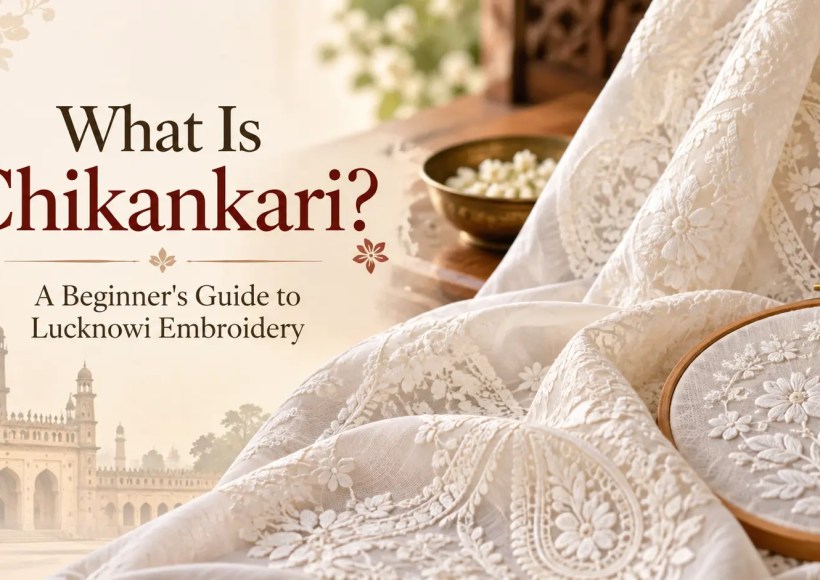
What Is Chikankari? A Beginner’s Guide to Lucknowi Embroidery
There is a reason a Chikankari kurti never really goes out of style. Look closely at one and you will see tiny, patient stitches that form delicate flowers, vines and leaves, each one worked by hand. That quiet detail is what makes Lucknowi embroidery one of India’s most loved textile traditions. If you have ever wondered what Chikankari actually is, how it is made, or how to tell the real thing from a lookalike, this guide covers it in plain language. What is Chikankari? Chikankari is a traditional hand embroidery from Lucknow in Uttar Pradesh, which is why it is often called Lucknowi work. It is widely believed to have flourished under Mughal-era patronage, and Lucknow Chikan craft today carries a Geographical Indication (GI) tag, which recognises it as a craft tied to its place of origin. Traditionally the embroidery was done in white thread on soft, airy fabrics such as mulmul and cotton, which made it ideal for hot weather. Today you will find it in pastels, earthy tones and bold colours, on everything from short kurtis to dupattas. How Chikankari is made The process is slower than most people expect: Design: A pattern is stamped onto the fabric using block prints made with washable dye. Embroidery: Artisans stitch over the pattern by hand, using different stitches for different parts of the motif. Washing and finishing: The fabric is washed to remove the stamped guide marks, then finished so the embroidery sits neatly on the cloth. Because so much of the work is manual, a single garment can take many hours to complete. Four Chikankari stitches worth knowing Chikankari uses dozens of stitches. These four will help you read almost any piece: Bakhiya (shadow work): Stitched from the reverse side of the fabric, so a soft, shadowy outline shows through on the front. It looks especially pretty on light, breathable cloth. Tepchi: A simple, long running stitch, often used to fill in motifs with a light, airy texture. Murri: Tiny, rice-grain-like stitches, commonly used for the centres of flowers. Jaali: A net-like openwork effect, created by gently separating the threads of the fabric instead of cutting them. You can see bakhiya work in our Chikankari 3/4-sleeve Bakhiya short kurtis. How to spot genuine hand-embroidered Chikankari Not every piece sold as “Chikankari” is hand embroidered. Here is a simple checklist before you buy: Turn it inside out. Hand embroidery looks neat but slightly varied on the reverse. Machine work tends to look perfectly uniform and flat. Look for small imperfections. Tiny differences in stitch size are a sign of a human hand, not a flaw. Check the fine details. Murri knots and jaali openwork are hard to fake convincingly. Feel the fabric. Good Chikankari sits on soft, breathable cloth such as cotton or mul, not stiff or scratchy material. Read the listing carefully. Look for clear wording such as “hand-embroidered” in the product name or description, and ask the seller if it is not stated. Be realistic about price. Hours of skilled work cannot be sold for almost nothing, so an unusually low price is worth a second look. Wearing Chikankari today Chikankari has moved well beyond the classic white kurta. Our collection includes long straight kurtis in shades like lavender, bottle green, mehndi green and sky blue, short kurtis for easy everyday wear, and Chikankari pants and dupattas to complete the look. It works on a college day, at a family function or on a casual weekend, and the softness of cotton keeps it comfortable through a long day.
-
 How to Wash and Care for Chikankari, Gota Patti and Cotton Clothes October 26, 2026
-
How to Style Chikankari Kurtis and Cotton Co-ord Sets: 7 Easy Looks October 26, 2026
-
What Is Chikankari? A Beginner’s Guide to Lucknowi Embroidery October 26, 2026